
"coffee tree damage"
3000 article(s) found

Introduction to the honey-like sweet aroma of Ethiopian coffee manor
These mountain villages are foggy, like spring all year round, with a gentle breeze in summer, cool but not hot, rain but not damp, and no cold damage in winter, giving birth to a unique regional flavor of citrus and flowers. Coffee trees are mostly planted in farmers' own backyards or mixed with other crops in the fields. At first, Yega Xuefei's coffee trees were planted by monastic academics in Europe, and later by farmers or cooperatives. Yejiaxue

Research says wild coffee beans will become extinct in the future if global warming continues
The threat to coffee trees is becoming more and more serious, and upheaval may follow. In the coming decades, coffee bean production is likely to move from the equator to the mountains, leading to deforestation. In addition, in addition to rising temperatures, climate change may also lead to the spread of fungi, which in turn destroys coffee trees. In 2012, abnormal high temperatures and rainfall occurred in Central America, and coffee leaf rust then attacked coffee trees.

Panamanian Coffee Manor Jade Manor introduces Rosa Coffee beans
First of all, let's talk about jadeite jade. This coffee shop, located in the southwest of Panama on the slopes of the Baru volcano, was originally a harmonious farm. Growing coffee is only part of the economic activities of farming. Other economic activities include dairy cattle, citrus cultivation, and so on. At the end of the last century, the rural owner, the Peterson family, accidentally discovered a facility.

Introduction to the taste of Honduran coffee
The granules of coffee beans in Honduras are large in shape, uniform in size and glossy in color. In order to facilitate harvesting, farmers will prune the coffee trees to no more than 150 centimeters, because if they grow too high, they have to set up ladders to pick, which is not only time-consuming, but also may damage the trees by bending branches. As the ripening period of each fruit of the coffee bean is different, it is necessary to keep the coffee bean in good condition.

Description of the Flavor and Taste of Sunshine Yega Coffee Wauka
A brief introduction to Yega Xuefei Coffee Yejasuefi's coffee trees were planted by monastic academics in Europe and later transferred to farmers or cooperatives. Yega Xuefei is actually constructed by the surrounding coffee communities or cooperatives, including: Hafusha, Hama, Biloya. These mountain villages are foggy, like spring all the year round, with a gentle breeze in summer, cool but not hot, rain but not damp, and no winter.

Introduction of Kenya Coffee producing country of Arabica Coffee Tree Origin
Kenya is bordered to the north by Ethiopia, the origin of Arabica coffee trees, but it was not until the beginning of the 20th century that coffee cultivation began. In the 19th century, missionaries introduced Arabica trees from Yemen, but did not plant them in large quantities until 1893. Brazil's ancient bourbon coffee seeds were introduced to cultivate coffee on a large scale. In other words, the current Kenyan coffee is of Brazilian origin.

The Origin of Bourbon Coffee trees in Kenya SASINI Manor Berman Manor
Kenya is bordered to the north by Ethiopia, the origin of Arabica coffee trees, but it was not until the beginning of the 20th century that coffee cultivation began. In the 19th century, missionaries introduced Arabica trees from Yemen, but did not plant them in large quantities until 1893. Brazil's ancient bourbon coffee seeds were introduced to cultivate coffee on a large scale. In other words, the current Kenyan coffee is of Brazilian origin.

About round beans, it is also called Peaberry. Is it good or not in coffee beans?
Round bean / common bean, known as Peaberry or caracoli in English, is a variety of coffee beans. In fact, the male bean is a flaw, officially speaking, it is not a normal development of coffee beans. The causes are usually caused by insect damage, lack of rain in case of prolonged drought, or malnutrition of coffee trees. In general, the fruit of a coffee tree contains two coffee beans, each in a flat hemispherical shape.

Introduction of Xuemai Manor Coffee Variety producing area characteristics, Flavor and Taste Fine Coffee
The advantage of Bolivian coffee lies in its high altitude and excellent varieties of coffee, where the traditional Tibica and a small amount of Kaddura are highly valued in the world market. In the past, coffee trees in Bolivia used to act as hedges and ornaments around the garden. Real commercial production began in the early 1950s. The great frost of 1957 seriously damaged Brazil

Description of the Flavor of Coffee picking and growing process introduction to the Regional treatment of Coffee varieties
Coffee beans coffee trees begin to bear fruit about three to five years after sowing, and the next 20 years from the beginning to the fruit will be a high-yielding period. In order to facilitate harvesting, farmers usually control the pruning of coffee trees to about 2 meters, because if they grow too high, they have to climb a ladder to pick, which is not only time-consuming, but also may damage the tree by bending branches. Coffee trees need some tall shade trees to be planted together.

Characteristics of Honduran Coffee Flavor description of production area by Grinding scale
The characteristics of Honduran coffee taste grinding scale regional flavor description treatment Honduran coffee bean particles are large in shape, uniform in size, uniform in color and glossy. In order to facilitate harvesting, farmers will prune the coffee trees to no more than 150 centimeters, because if they grow too high, they have to set up ladders to pick, which is not only time-consuming, but also may damage the trees by bending branches.

The knowledge about round beans, it is also called male beans, coffee beans, coffee bean shape.
Round bean / common bean, known as Peaberry or caracoli in English, is a variety of coffee beans. In fact, the male bean is a flaw, officially speaking, it is not a normal development of coffee beans. The causes are usually caused by insect damage, lack of rain in case of prolonged drought, or malnutrition of coffee trees. In general, the fruit of a coffee tree contains two coffee beans, each in a flat hemispherical shape.

A simple introduction to the world of defective coffee beans
Professional barista communication, please pay attention to coffee workshop (Weixin Official Accounts cafe_style ) 01 Coffee growing environment Coffee beans in appearance differences come from different growing environments, coffee growth zone is usually Tropic of Cancer and Tropic of Cancer and tropical areas near the equator. Unique coffee varieties are grown in special growing areas, and there are many types of coffee beans and growing environments. for finishing

Yega Chevy Coffee beans Italian Coffee Grinding degree
At first, Yejassefi's coffee trees were planted by European monks, and later by farmers or cooperatives. Yega Xuefei is actually constructed by the surrounding coffee communities or cooperatives, including: Hafusha, Hama, Biloya. These mountain villages are foggy, like spring all the year round, with a gentle breeze in summer, cool but not hot, rain but not damp, and no cold damage in winter.

Introduction to the taste and flavor of large coffee beans in Honduras
The granules of coffee beans in Honduras are large in shape, uniform in size and glossy in color. In order to facilitate harvesting, farmers will prune the coffee trees to no more than 150 centimeters, because if they grow too high, they have to set up ladders to pick, which is not only time-consuming, but also may damage the trees by bending branches. As the ripening period of each fruit of the coffee bean is different, it is necessary to keep the coffee bean in good condition.

Description of Standard Flavor of washed Cochell Coffee by hand
A brief introduction to the Standard Flavor description of hand-washed Cochelle Coffee A brief introduction to the Grinding scale Yega Xuefei's coffee trees were planted by European monks (a bit like Belgian monks growing wheat to brew beer) and were later transferred to farmers or co-operatives. Yejasuefei is actually constructed by surrounding coffee communities or cooperatives, including Edido Idido, ha, near Fog Valley Misty valley.

Introduction of Honduran coffee with rich and mellow taste
The granules of coffee beans in Honduras are large in shape, uniform in size and glossy in color. In order to facilitate harvesting, farmers will prune the coffee trees to no more than 150 centimeters, because if they grow too high, they have to set up ladders to pick, which is not only time-consuming, but also may damage the trees by bending branches. As the ripening period of each fruit of the coffee bean is different, it is necessary to keep the coffee bean in good condition.
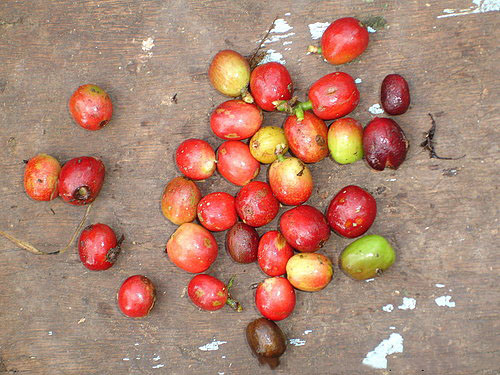
A coffee tree is not a tree? The cultivation method of Coffee and the Standard of fertilization in Coffee Garden
Professional coffee knowledge exchange more information about coffee beans Please follow the coffee workshop (Wechat official account cafe_style) what are the fruits and seeds of coffee? The good quality and type of coffee depends on the cultivation method of coffee the elements of coffee cultivation (the conditions of coffee cultivation) Coffee tree is called a tree, but it is actually an evergreen shrub. If

Introduction of Honduran coffee beans with large granules
The granules of coffee beans in Honduras are large in shape, uniform in size and glossy in color. In order to facilitate harvesting, farmers will prune the coffee trees to no more than 150 centimeters, because if they grow too high, they have to set up ladders to pick, which is not only time-consuming, but also may damage the trees by bending branches. As the ripening period of each fruit of the coffee bean is different, it is necessary to keep the coffee bean in good condition.
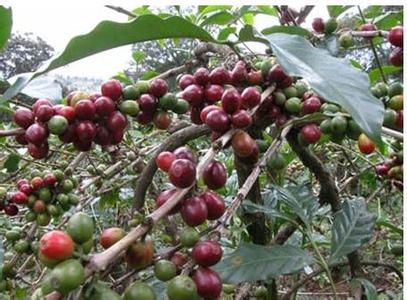
Research says wild coffee beans will become extinct in the future if global warming continues
According to reports, researchers say that due to rising temperatures and rampant pests and fungi, it is estimated that the number of farmland suitable for growing coffee trees will be halved by 2050. Once the coffee trees disappear, it is bound to have a severe impact on the 120 million people around the world who depend on coffee beans for their livelihood, many of whom live in the world's poorest countries. At present, coffee beans are produced in 70 countries in the world, and coffee industry is one of them.